 ES
ES  HE
HE  SFR
SFR  AR
AR  EN
EN 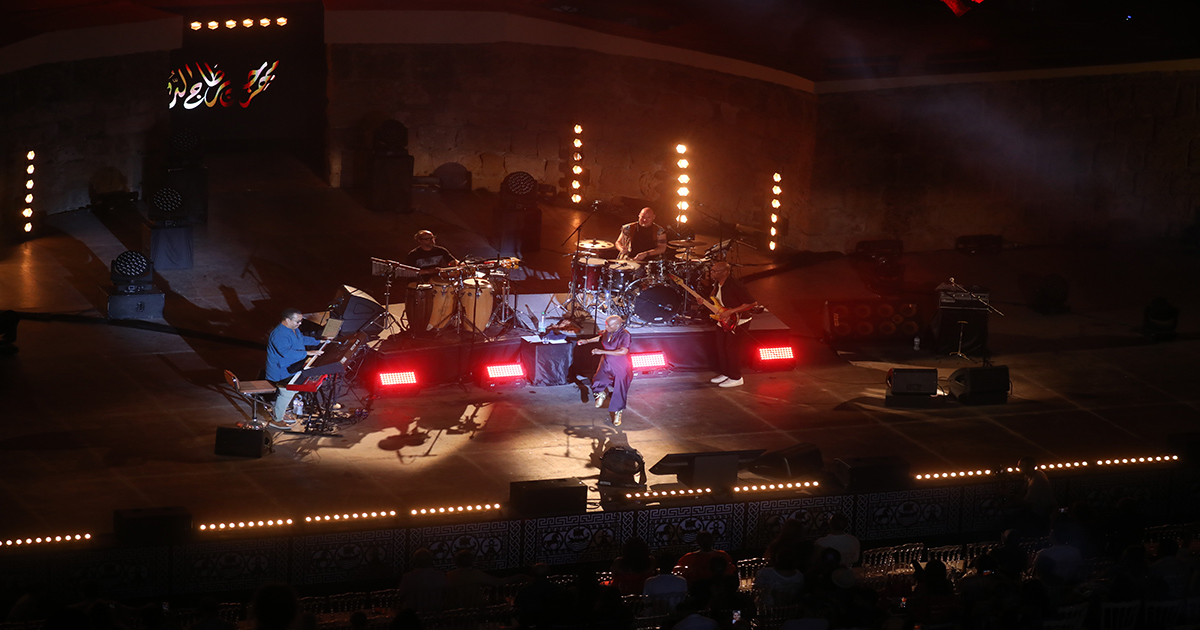
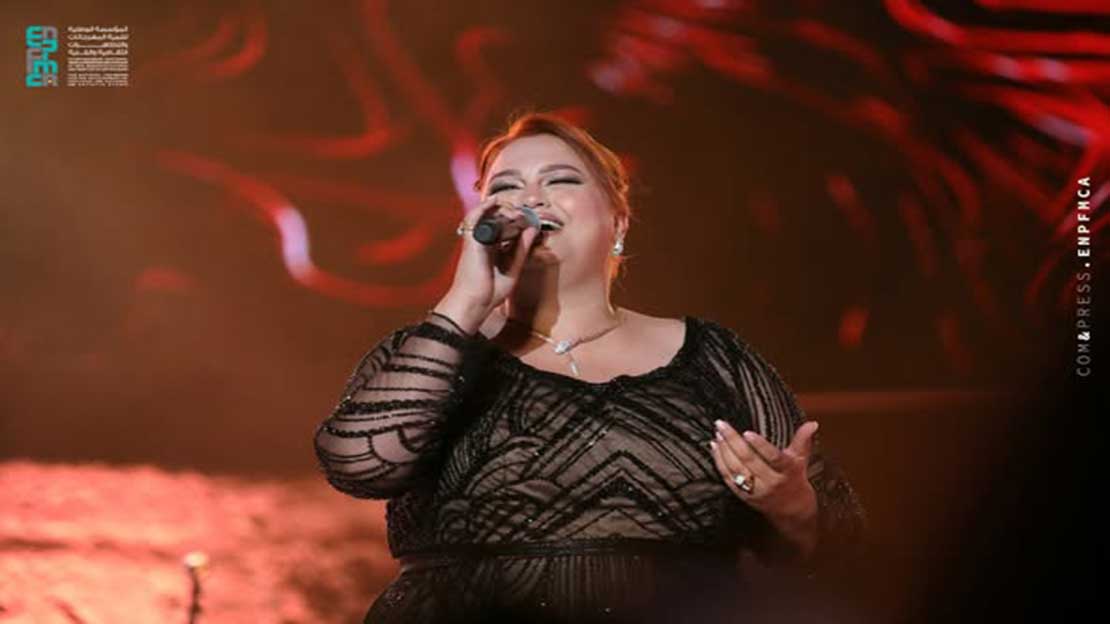
A mad encounter with an artist who turns the stage into a realm of life and hope, a space for humanity, creativity, and the crafting of a dazzling world where rhythms and music from every corner of the globe harmonize. Angélique Kidjo, the Voice of Africa, ascended the ancient stage of the Carthage Theatre as part of the 60th edition of the International Festival, on the evening of Thursday, July 23, 2026. She delivered a thunderous performance, sending a love letter to the world and shouting with a voice that recognizes no borders: "Long live Africa, long live everyone, long live humanity!"
In an exceptional evening that condensed forty years of singing and artistry, Kidjo delighted her fans and reveled with them on one of the most beautiful stages in the world. Her voice carried Africa to the globe, and her powerful throat was her weapon to convey messages of liberation and to defend human dignity wherever it is threatened.
Kidjo performed 23 of her most famous songs, opening the show with "Kukua" and closing with "Tumba," and between them, a torrent of melodies, rhythms, and unbridled energy—a night that will linger in memory for a long time. The scenography painted the space with light, embarking on a luminous journey that infused hope and life, evoking the women of Africa who weave their dreams and stories into their clothing. The screen became a painter's canvas, capturing a fraction of the dark continent's magic, with the reflection of red roses gradually blooming as part of the narrative of African resistance against all forms of marginalization, proving that art is a language that needs no passport.
Kidjo's songs carry an uncompromising spirit. From Carthage, she dedicated one of her songs to her strong mother, whose magic weapon was hope—a gift to all women and mothers who give love unconditionally. She sang "Super Woman," a song that acknowledges a woman's ability to resist all forms of injustice and weakness, becoming superhuman for herself and her children. In that moment, the entire theatre applauded the women of the world, the mothers of Africa, and every woman who refuses to submit.
For the youth, she sang "For Me" and addressed the audience: "This song is a gift to the young people living in this difficult time, suffering from this world. I was inspired by my daughter... Think of a better future for humanity, with less pain and fewer wars. I believe that today's youth can change the world." Her words were a beacon of hope for a generation searching for light in a world groaning under the weight of wars and crises.
Kidjo possesses a remarkable ability to merge with the stage. Her music retains African rhythms and echoes the voice of liberation movements across the continent. With her songs, you cannot remain neutral; the melodies seep through your ears to your heart and entire body, and you find yourself unconsciously moving to the rhythm that mimics life in all its manifestations.
Her dances and the choreographed visuals on screen mirrored hearts that refuse submission and fear, alongside songs like "Malaika" and "Bando." For Africans, dance is a language everyone masters, with its own teachings. Joy has its dance, and pain has its own as well—and between them, her body broke free, delivering one-of-a-kind performances born of moments of sheer ecstasy and creativity.
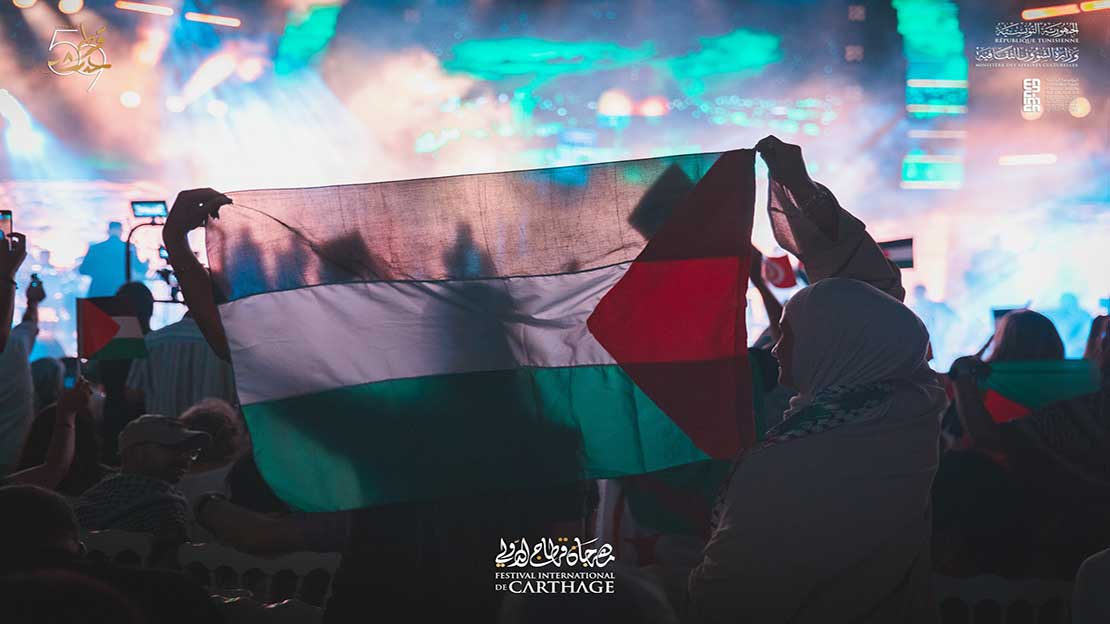
For Africa, she sang "Afirika," and for unity among the children of one continent, she declared to her audience: "We are all brothers and sisters, and if we do not accept our differences, we cannot achieve our humanity. Let us sing for our differences, for our humanity." In the stands, Tunisians and Africans formed a single body, dancing to the rhythm of unity and the rejection of racism, in a majestic scene that embodied the meaning of shared human belonging.
Kidjo concluded her evening by taking a stand "for those beneath," with her own rendition of "Jerusalema" by Nomcebo Zikode, completing the final scene with an emotional charge and an unmistakable position: the artist stands with just causes, the true artist stands with the truth and nothing but the truth. At that moment, the audience were no longer mere spectators but partners in a message, part of a global choir rejecting injustice and calling for freedom.
Angélique Kidjo, with all the energy, madness, and love she carried, proved that music is not just melodies—it is a living spirit, a story told, and a bridge connecting hearts. From the Carthage stage, she wrote a new chapter in the festival's history, affirming that great art is that which turns the stage into a platform for liberation, the audience into one family, and the world into a small village playing to the rhythm of hope.