 ES
ES  HE
HE  SFR
SFR  AR
AR  EN
EN 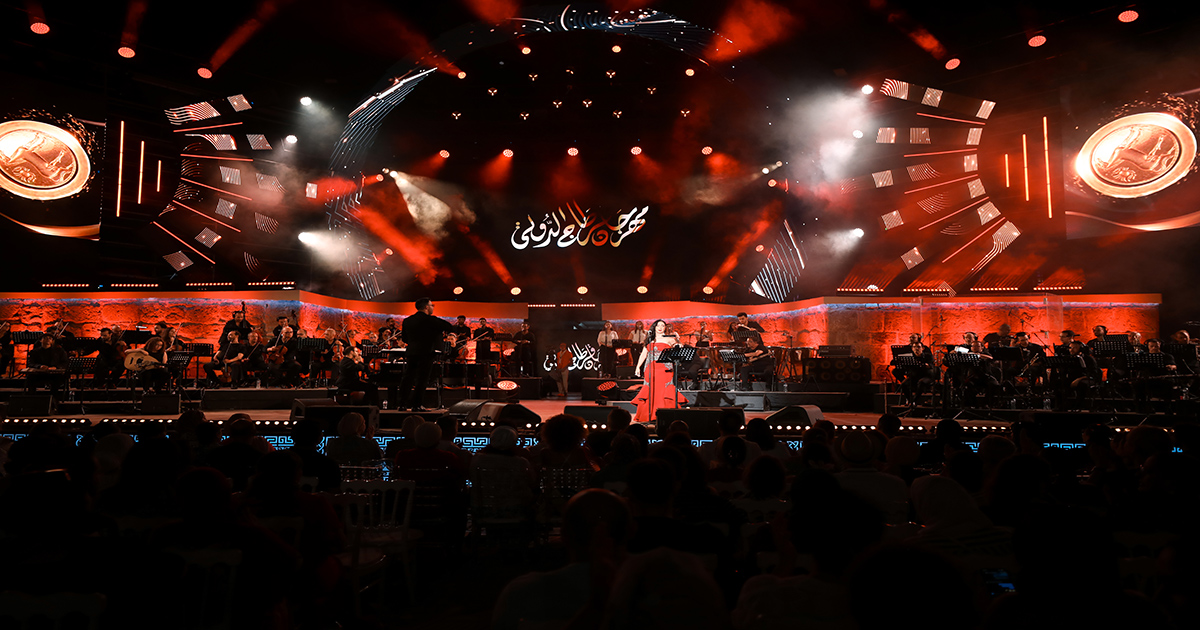
On the evening of July 22, 2026, the Tunisian Symphony Orchestra, conducted by Maestro Chadi El Ghrefi, delivered an extraordinary performance as part of the 60th edition of the Carthage International Festival. The concert, titled "Tunes of My Homeland" ("Musiquats Bladi"), was a celebration of six decades of Tunisian music, weaving together the country's rich melodic heritage with the sophistication of orchestral arrangements, while also embracing other art forms such as dance and poetry.
The evening opened with a graceful ballet performance, featuring dancers in white dresses whose harmonious movements evoked the image of a brush dancing with the wind—a poetic prelude to a night that promised to be both nostalgic and innovative.
The first musical piece was "Sir Tunis," originally composed by Chadhli Mefteh for military music, but newly orchestrated by Maestro Chadi El Ghrefi. The first artist to take the stage was Noureddine El Béji, known for his powerful voice and calm presence. He delivered timeless Tunisian classics such as "Fi Ayounek Nar" by Mohamed Jemoussi, "Shehloula" by Ahmed Hamza, and "Ki Ydhiq Bik El Dahr" by Sadek Thraya. El Béji rose to the occasion, breathing new life into these beloved songs.
Next, Arij Brik appeared in a white Carthaginian dress, captivating the audience with her youthful yet convincing voice. She performed "Ech Yhem" by Mohamed Sassi and "Donya Haniya" composed by Salah El Mahdi, proving her mastery and earning the crowd's admiration.
From Mohamed Sassi's compositions to those of Mohamed Ridha, the journey continued with "Sidi Bou Saïd El Ali" as sung by Ali Riahi, now reinterpreted in a new orchestral arrangement by Ahmed Rabaii. He also performed "Tebaa'ni" by Hédi Jouini and "Ah Min El Aynayn" composed by Kaddour Srarfi. This was Rabaii's second appearance on the Carthage stage, following his participation in the opening concert with Saber Rabaii, but he emphasized that performing with the symphony orchestra was a completely different and enriching experience.
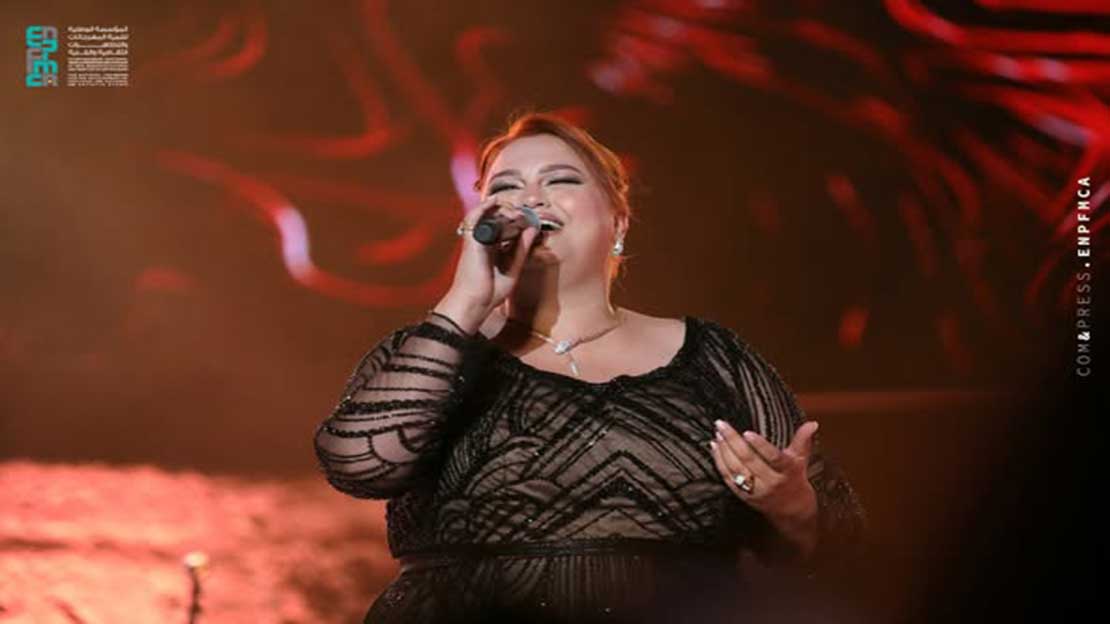
The fourth participant was Asma Ben Ahmed, who sang "Zahr El Limoun" by Mohamed Trabelsi, "Awwadtni Alal Wed" by Abdelkrim Sahraoui, and "Layali Ishbiliya" by Sayed Chatta. In this new arrangement, Maestro Chadi El Ghrefi transported the songs into the realm of flamenco, where the violins created their own rhythms and opened a gateway to pure beauty. "Layali Ishbiliya" became the highlight of the evening, as the violins spoke the language of enchantment, and the audience was left in awe of the orchestral magic.
From the younger generation, Nesrine Mahbouli brought her operatic voice to the stage, performing "Gitara" by Youssef Hajjaj and "Yasmina" by Kamel Raouf Enneggati, both arranged by Haroun El Gherou. Her performance added a new dimension to the songs, earning her enthusiastic applause.
The evening concluded with the seasoned voice of Chokri Bouziane, who sang "Kas El Saber" composed by Samir El Akrabi, and "Ma Sabni," composed by Bouziane himself, both orchestrated by Haroun El Gherou. Bouziane expressed his long-awaited opportunity to perform with the Tunisian Symphony Orchestra and with Maestro Chadi El Ghrefi, recalling his earlier collaboration with Mohamed El Ghrefi on the song "Ya Hamam Ya Tayr."
Yet, the concert carried a powerful surprise: the Palestinian artist Rola Azar joined the stage as a special guest. She performed "Ikhlaa Naalek Hathi Ardhi," a patriotic song orchestrated by Maestro Hadi El Gherou, with lyrics that echo resilience: "Take off your sandals, O Moses, and ascend Mount Sinai, scatter jasmine over the plains of Palestine, for even the roses resist, even the olives and the figs." The orchestral arrangement gave the rhythm a thunderous force, as if symbolizing the will of an unyielding people choosing resistance against oppression.
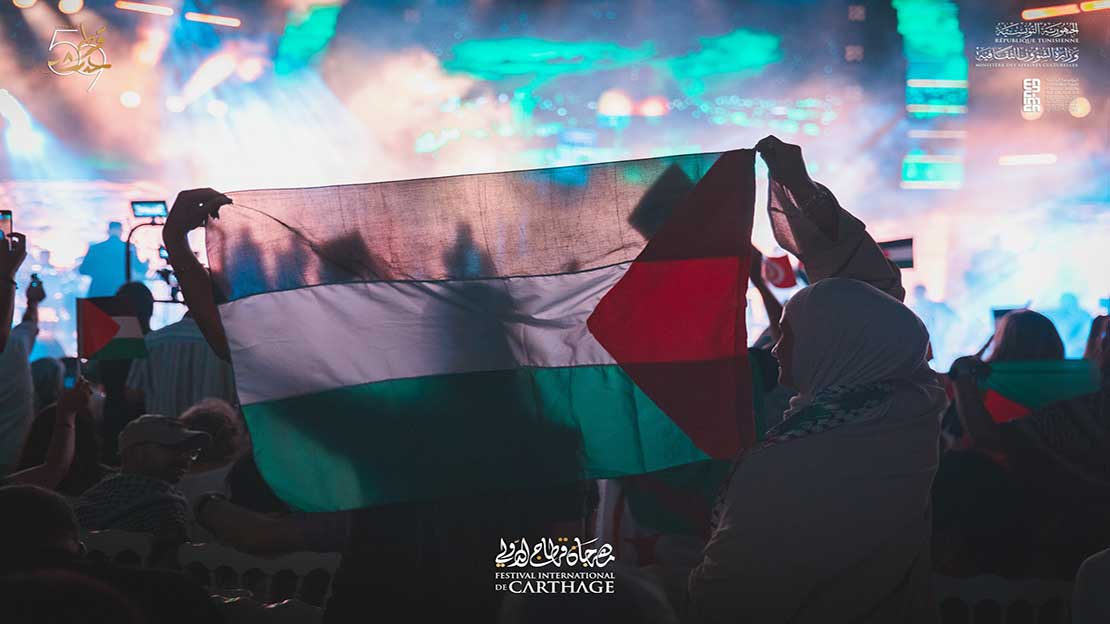
Rola Azar wore her homeland on her dress, adorned with traditional Palestinian embroidery—a symbol of steadfastness and identity. On the Carthage stage, she sang for the land, for Palestine's olives and pines, for her people, declaring: "This is my land, this is my honor, and I will perish here. Here I was, and here I shall remain, like the olive tree." Her voice was the voice of a resisting Palestine, and from Tunis, the audience chanted: "Long live Palestine, from the river to the sea."
In a press conference following the concert, Maestro Chadi El Ghrefi spoke about the year-long preparation for the show, emphasizing that the selection of artists was based on their artistic merit. He noted: "We encountered no difficulties in producing this performance. We focused on various compositional schools, and for me, Chokri Bouziane and Noureddine El Béji are landmarks in my musical memory."
Rola Azar expressed her gratitude, saying: "I am deeply grateful to be here. Tunisia is the only country where I truly feel free. I am delighted to work with Maestro Chadi El Ghrefi, and it is an honor to perform with this orchestra. Honestly, the occupation fears our unity."
"Tunes of My Homeland" was not merely a concert; it was a celebration of memory, a defense of identity, and a bold statement of solidarity. It proved that music, at its best, is a universal language capable of uniting people, preserving heritage, and conveying the most profound human messages.